
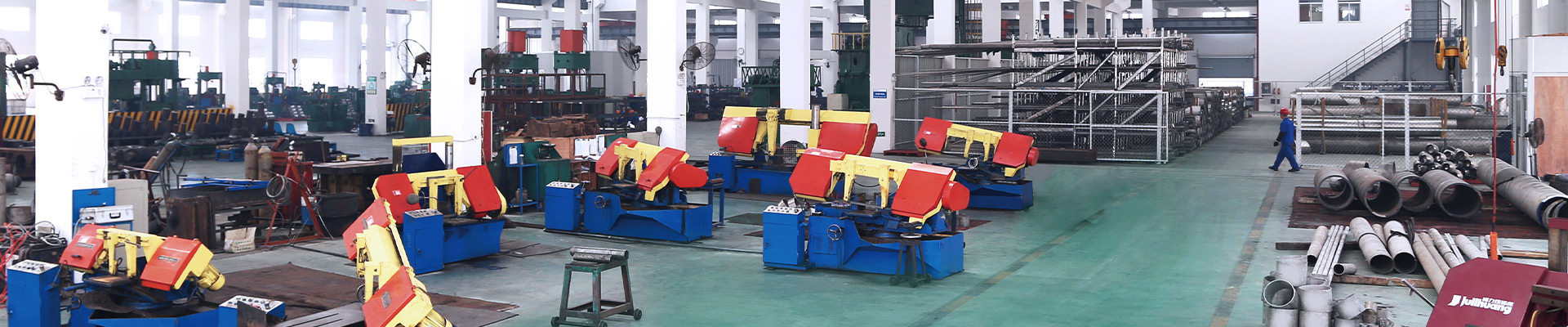
In today's industrial landscape, efficiency and safety depend heavily on the quality of pipeline components. Among them, the Hot Induction Bend stands out as one of the most reliable and versatile solutions. FEITING specializes in manufacturing advanced Hot Induction Bend products that meet global standards and support industries from petrochemical to offshore engineering.
Understanding the Technology Behind Hot Induction Bend
The Hot Induction Bend process involves heating a localized section of a pipe using electromagnetic induction, followed by controlled bending to the desired radius. This method ensures a consistent wall thickness and uniform metallurgical structure throughout the bend. Compared with cold bending or segmented elbow welding, the Hot Induction Bend provides smoother flow transitions and higher mechanical strength, making it ideal for critical pipeline systems.
For applications with tight layouts or specific geometric needs, FEITING provides custom radius hot induction bend solutions. A custom radius hot induction bend ensures the perfect curvature for every design, eliminating unnecessary joints and optimizing flow performance. These precisely engineered bends are frequently chosen for refinery piping, gas transmission lines, and offshore risers.
Advantages of Custom Radius Hot Induction Bend
When space or flow design is a challenge, the custom radius hot induction bend becomes indispensable. Unlike standard elbows, a custom radius hot induction bend offers better control of flow direction and reduced turbulence. It also reduces the number of weld seams, which minimizes potential leak points and improves overall system safety.
FEITING engineers utilize advanced bending machines to produce each custom radius hot induction bend with tight tolerances and reliable consistency. This precision guarantees compatibility during installation and reduces field rework.
High-Strength Carbon Steel Bend for Demanding Environments
FEITING's high-strength carbon steel bend range is designed for pipelines exposed to high pressure, mechanical stress, and thermal cycling. Whether in refineries, chemical plants, or power generation facilities, the high-strength carbon steel bend provides superior toughness and fatigue resistance.
By selecting a high-strength carbon steel bend, project managers can ensure structural reliability and longer service life under extreme temperature and pressure conditions. FEITING produces these bends in compliance with ASME B16.9 and DIN 2605 standards, ensuring safety and global compatibility.
Moreover, each high-strength carbon steel bend is tested for hardness, impact resistance, and dimensional precision before delivery.
Corrosion-Resistant Alloy Steel Bend for Harsh Conditions
For applications exposed to corrosive media or seawater, FEITING supplies the corrosion-resistant alloy steel bend series. These bends are made from duplex, super duplex, and nickel-based alloys, providing long-term resistance to pitting, oxidation, and stress corrosion cracking.
A corrosion-resistant alloy steel bend is widely used in offshore platforms, desalination plants, and chemical process systems where reliability is essential.
By choosing FEITING's corrosion-resistant alloy steel bend, customers benefit from reduced maintenance costs and extended service intervals, even in highly aggressive environments. Each corrosion-resistant alloy steel bend undergoes non-destructive testing and surface finishing to ensure premium quality.
Manufacturing Standards and Quality Assurance
Every Hot Induction Bend manufactured by FEITING adheres to international specifications.
The company offers both seamless and welded configurations with diameters ranging from ½ inch to 36 inches and wall thickness from 3mm to 40mm. Each Hot Induction Bend can be produced with a bending radius between 1D and 10D, or as a custom radius hot induction bend tailored to the customer's layout.
Rigorous inspection procedures—covering ultrasonic, hydrostatic, and dimensional checks—ensure that each high-strength carbon steel bend and corrosion-resistant alloy steel bend meets stringent quality requirements.
Efficiency and Flow Optimization
A properly designed Hot Induction Bend not only strengthens the pipeline structure but also optimizes fluid dynamics.
The smooth internal surface of a custom radius hot induction bend minimizes flow disruption, resulting in lower energy consumption and reduced erosion. Compared with welded elbows, a single continuous Hot Induction Bend provides better pressure distribution and eliminates stress concentration points.
FEITING's precision forming and post-bending heat treatment guarantee that every high-strength carbon steel bend and corrosion-resistant alloy steel bend performs reliably in service.
Applications Across Industries
FEITING's Hot Induction Bend solutions are utilized in a broad spectrum of industries:
Oil and Gas transmission pipelines
Chemical and petrochemical processing plants
Power generation and refineries
Offshore and subsea engineering projects
In each of these environments, FEITING's custom radius hot induction bend, high-strength carbon steel bend, and corrosion-resistant alloy steel bend options provide unmatched dependability and long-term economic benefits.
Why Choose FEITING
Choosing FEITING means partnering with a team that understands industrial pipeline challenges and delivers reliable bending solutions.
With decades of manufacturing expertise and a commitment to quality, FEITING stands as a trusted supplier for customers seeking dependable Hot Induction Bend solutions for modern industrial infrastructure.