
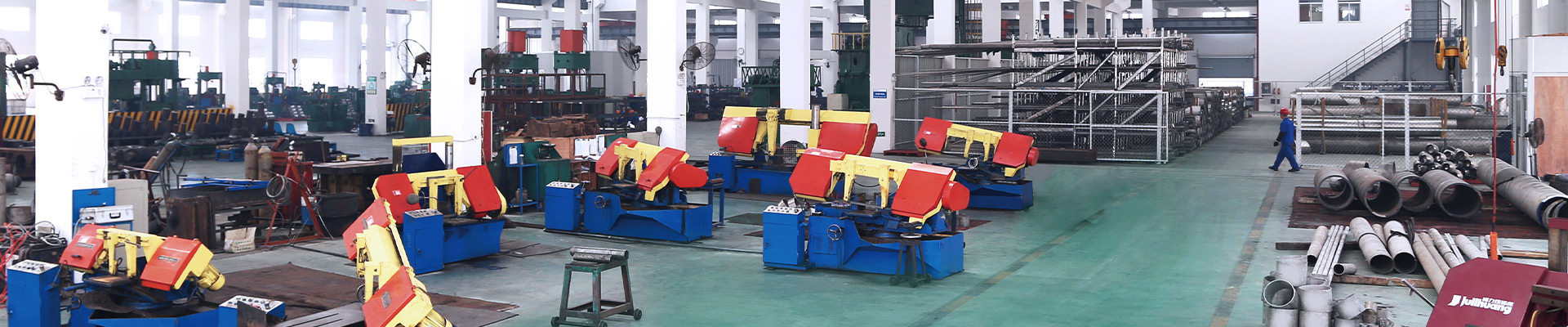
In connection quality of industrial piping projects is crucial since it impacts nearly everything. In comparison to ordinary casting products, forged fittings are typically associated with improved structural strength and sealing performance that is more reliable. By forging, internal structure of machined forged steel fittings is made denser so that they are even more capable of handling pressure changes and operation over a long period of time. As a matter of fact, many buyers rely on forged pipe fittings in industrial environments since they consider durability to be the main factor rather than short-term savings.
FEITING is a manufacturer of industrial piping products for international engineering projects. The company issues forged fittings, flanges, pipes, and other piping accessories in stainless steel, carbon steel, duplex steel, and alloy steel materials suitable for different sectors.
Why Industries Still Use Forged Fittings
Typically, pipelines in heavy industries operate in tough environments. The factors which exert stress on the connections are; high pressure, vibration, corrosion, and temperature fluctuations. This is exactly the kind of environment forged fittings boast of.
Refineries tend to use forged steel fittings because such fittings minimize the risk of leakage during uninterrupted operations. Operators of offshore projects also depend on forged pipe fittings since harsh sea conditions can rapidly cause deterioration of low-quality elements.
Furthermore, industries are always on the lookout for forged fittings that will stand the test of time. Besides offering dimensional stability, properly manufactured forged steel fittings often exhibit better sealing performance too. It is a common practice for buyers working on major EPC projects to thoroughly focus on the machining accuracy of forged pipe fittings prior to supplier approval.
In industrial settings, forged fittings are typically used in:
· oil and gas pipelines
· petrochemical plants
· LNG systems
· offshore platforms
· power stations
· marine engineering projects
For many engineers, investing in dependable forged steel fittings at the initial stage is an effective way of steering clear of m an expensive repair later.
Typical Issues with Low-Grade Forged Steel Fittings
Not all forged fittingswill perform at the same level. Some products, although seem good at the surface, reveal various faults upon installation.
The first common issue is incorrectly cut threads in forged pipe fittings. Inadequate machining gives rise to the poor sealing ability of the joints and also makes the fitting installation process more difficult. Another problem arises when manufacturers deliberately or inadvertently use different composition raw materials for producing forged steel fittings.
The following issues are also shared by buyers:
· rough internal surfaces
· poor corrosion resistance
· unclear material traceability
· unstable pressure performance
· inconsistent wall thickness
Initially, buying inexpensive forged fittings might seem like a good idea, but the real costs of replacement and repair are usually much higher down the line.
Experienced buyers tend to request inspection data instead of immediately ordering large quantities of forged steel fittings. Pressure testing, PMI inspection, and dimensional checks are some of the crucial criteria for selecting forged pipe fittings distributors.
FEITING goes in depth with production quality and machining accuracy because the dependability of forged fittings largely rests on material control and manufacturing precision.
What to Consider When Buying Forged Pipe Fittings
To pick the right forged fittings, one has to take into account the working conditions, materials needed, and the pipeline layout.
Pressure Rating
The rated pressure of forged steel fittings has to correspond with the actual one at the site at all times. Inefficiently rated forged pipe fittings are prone to being damaged much quicker at high-pressure operating points.
Material Selection
Carbon steel forged fittings are sufficient for a variety of industrial systems. Stainless steel forged steel fittings have great ability to withstand corrosive atmospheres. Duplex and alloy materials are usually implemented in offshore and chemical sectors.
Connection Type
Socket weld forged pipe fittings have stayed as a gold standard among the high-pressure systems since they deliver better sealing reliability. At the same time, it is quite common for threaded forged fittings to be used whenever the pipeline system is small since they simplify the installation.
Manufacturing Quality
Exquisite machining positively influences the effectiveness of forged steel fittings. By using CNC equipment for higher precision, the consistency in dimensions and the efficiency of installation for forged pipe fittings is enhanced.
Industries That Can Benefit Most from Forged Fittings
Each industry sector usually calls for different types of forged fittings.
Usually oil and gas entities opt for carbon steel forged steel fittings in their mainline transmission pipelines. For chemical factories, an emphasis on corrosion resistance makes them go for stainless steel forged pipe fittings.
Engineering for offshore normally involves duplex steel forged fittings because of the exposure to salt and the severe working conditions. High-temperature steam systems rely on alloy steel forged steel fittings to keep up stable performance.
Since LNG facilities operate at very low temperature, forged pipe fittings that can handle such conditions are indispensable for safe running of the systems.
FEITING also caters to the needs of industrial clients that require special dimensions, pressure classes or alloy materials through customized forged fittings production.
Common Mistakes When Buying Forged Pipe Fittings
Some buyer teams still even consider price solely as the deciding factor when sourcing forged fittings. Such a decision may in fact cause problems in the long run.
One of the frequent blunders is to combine different standards of forged steel fittings in the same pipe system. This results in alignment and sealing issues during installation.
The other problem quite often arises when buyers forget or intentionally do not verify forged pipe fittings inspection documentation. If no material certificates or partial pressure testing reports will be present, project approval might be postponed.
Some enterprises also do not take into consideration the environmental conditions. Ordinary forged fittings could work well indoors but are prone to quicker failure in the marine or chemical environments.
Trusted suppliers in most cases supply:
· material certificates
· pressure testing reports
· PMI inspection
· heat treatment records
· dimensional inspection
· traceability documentation
Such pieces of information assist buyers in making sure that the quality of forged steel fittings meets the standards before the actual installation.
Conclusion
Strong connection points are very important if one wishes to have reliable pipeline systems. High-quality forged fittings, accurately machined forged steel fittings and solid forged pipe fittings support industries in reducing the risk of leaks, enhancing operating stability and cutting maintenance costs over time.
This is the main reason why oil & gas, petrochemical, marine, LNG, and power industries persist in selecting forged fittings for challenging industrial purposes.
Having considerable experience in manufacturing and being actively involved in servicing global industrial projects, FEITING remains a provider of forged steel fittings and forged pipe fittings that perform excellently under genuine industrial conditions.